Chapter 8 – Nadiring, Swarming and Reproduction
In this chapter
- The nadiring rule, and when not to nadir
- Why colonies swarm
- Swarm collection, bait hives and splits
- Raising more colonies without fuss
Nadiring
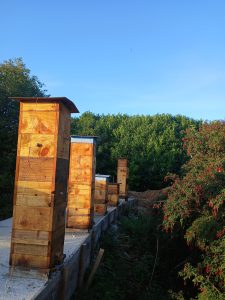
Nadiring is the main seasonal job in a Warré. The rule used throughout this book is:
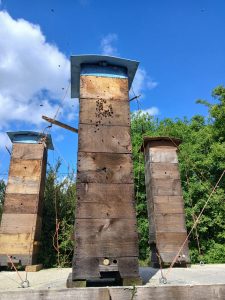
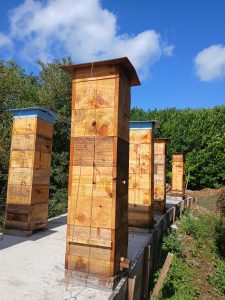
In spring, when the lowest box is about three-quarters full of comb and covered with bees, and a flow is on or about to start, add an empty box underneath.
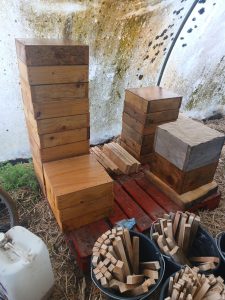
Lift the whole stack (a second pair of hands or a Warré hive lifter helps), put the new box with starter bars on the floor, and lower the stack back on top. The bees then build downward.
Do it early enough that the colony never feels cramped. In many inland areas that’s when the hawthorn is in bud; on warm coastal sites it’s earlier. If the flow continues, a second nadir may follow in June.
Don’t nadir in a dearth or in cold weather. Empty space under the cluster can chill the brood. Don’t nadir from late July onward either, because the bees won’t fill a new box before winter.
Swarming
Swarming is how a colony reproduces. Warré colonies swarm when they’re crowded, when the queen is older, or simply when it’s been a good season. Nadiring early reduces the urge, but it doesn’t stop it.
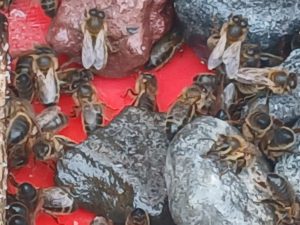
The old queen leaves first with the prime swarm. Any later, smaller swarms, called casts, go with young unmated queens. Swarm season here usually runs from late April to early July.
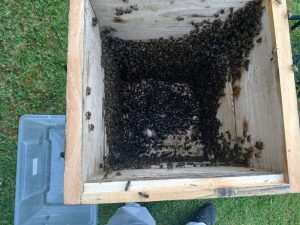
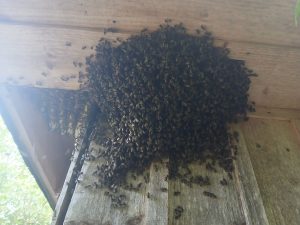
Collecting swarms. Many natural beekeepers let their colonies swarm and build up the apiary by collecting the swarms.
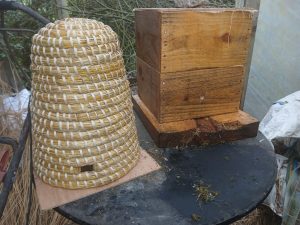
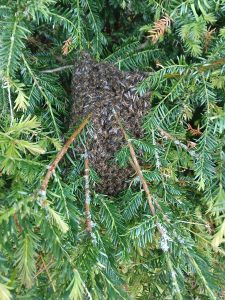
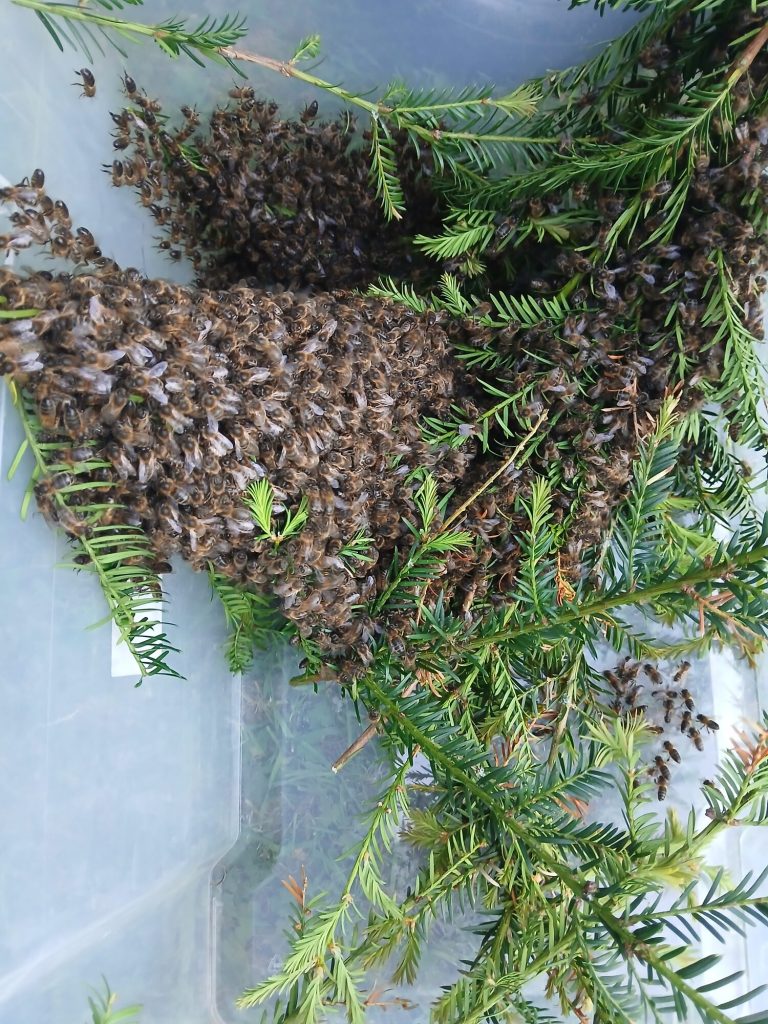
- Swarm in a hedge or on a branch: hold a box or skep underneath and give the branch one firm shake.
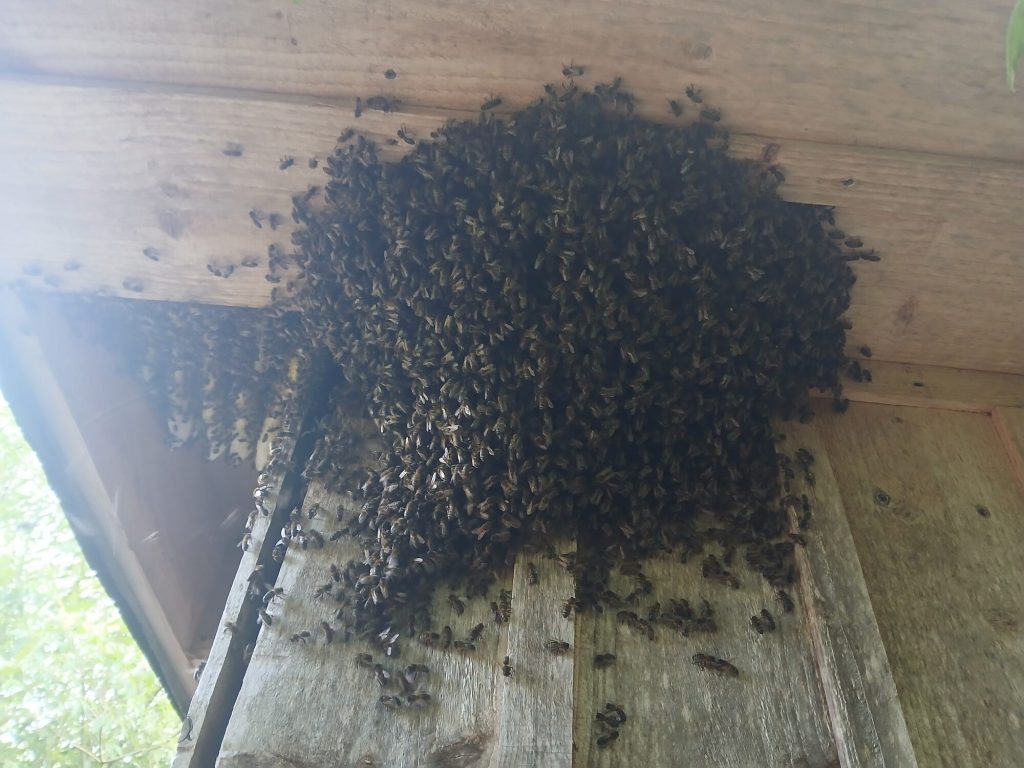
- Swarm on a wall or under an eave: brush the bees gently into the box.
- Leave the box nearby until evening so the flying bees can join, then hive them as in Chapter 6.
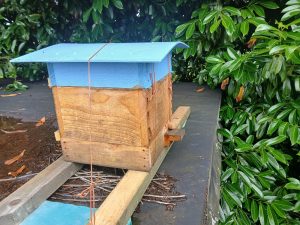
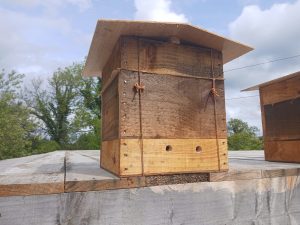
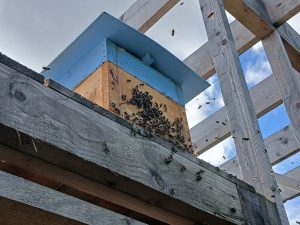
A single empty Warré box with old comb or a few starter bars, a roof and a small entrance makes a good bait hive. Set it 3–5 m up, if you can, from April. A drop of lemongrass oil helps attract scout bees.
Splits
If a swarm would be a problem, for example near neighbours, make a deliberate split in May instead:
- Lift the top brood box onto a new floor and roof, and take it to a site more than 5 km away. Otherwise, the foragers will fly back.
- Leave the original colony with the lower box. It must contain eggs or young larvae so the bees can raise a new queen.
- Make sure both halves have stores.
Cutting out queen cells is possible, but it fights the system. A split made before the colony is ready to swarm is cleaner.
More colonies, the simple way
Increasing your apiary is mostly swarm collection plus a few splits in May. A swarm hived on fresh bars during a flow often builds beautiful straight comb and becomes a strong colony the same year.
Queen rearing in small mating nucs is possible later on, but it’s an advanced step. A basic Warré will raise its own queens when you let it. Pick the calmest, healthiest colonies (the ones that come through winter on their own stores) to breed from.