Chapter 7 – Natural Hive Management, the Warré Way
In this chapter
- Safety and stings, before you go near a hive
- Reading a hive from the outside
- When and how to look inside
- The core rule: open the hive only when a job follows
- Simple records and temper
Safety and stings
Read this before you open a hive, and before you bring anyone else to one.
Gear. Always wear at least a veil. A full suit or jacket, gloves and boots tucked into trousers is better while you’re learning. Light colours are calmer for the bees than dark wool.
Have a lit smoker ready, even if you hardly use it. Use only a little cool smoke at the entrance and under the cloth.
Approach. Come at the hive from the side or the back, never across the flight path. Move slowly and avoid knocking or jarring the boxes. Don’t work bees in thundery weather, in the rain or late in the evening, when they’re at their crossest.
If you’re stung. Scrape the sting out straight away with a fingernail or the hive tool. Speed matters more than technique. Then walk away from the hive, because the alarm scent on the sting draws other bees.
Swelling and itching for a day or two is normal. A cold pack and an antihistamine help.
Anaphylaxis is an emergency. Watch for:
- swelling of the face, lips or throat;
- difficulty breathing or wheezing;
- dizziness or fainting;
- a rash spreading over the body.
Call 112 or 999 straight away. If the person has a prescribed adrenaline pen, help them use it.
Visitors and courses.
- Ask every visitor in advance about allergies.
- Keep children and pets away from the flight path.
- Brief people before you open a hive.
- Don’t work alone in a remote apiary without a phone.
- Keep a first-aid kit with antihistamine in the car or shed.
Reading the hive from outside
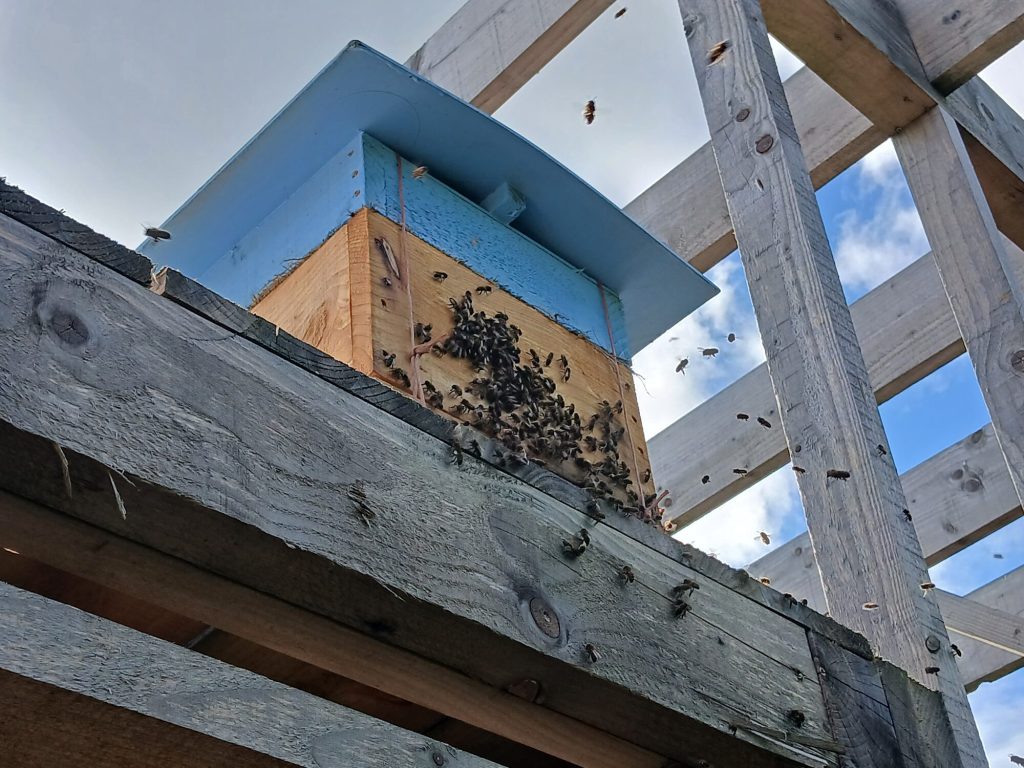
Day-to-day management is mostly watching, not handling. Walk the apiary in late morning on a day the bees are flying. Note:
- how busy the entrance is;
- the colour of the pollen going in;
- any dead bees, crawling bees or staining.
Then heft the hive: lift the back gently and feel the weight. A colony that was heavy in September and is suddenly light in March needs attention. One that still feels heavy can be left alone. A cheap luggage scale hooked under the box makes this more accurate.
Looking inside
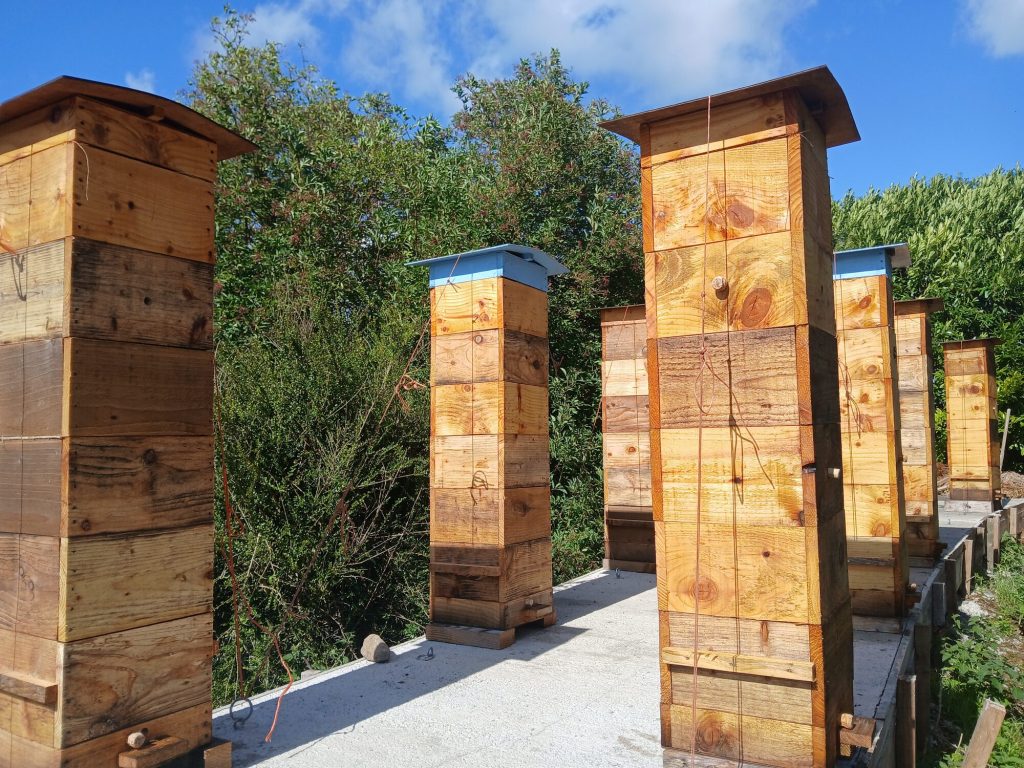
In a Warré you don’t pull bars out unless you have to, to fix cross-comb or check for disease. The usual look is one of two things:
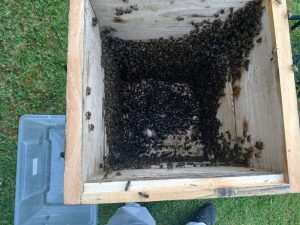
- On a warm day, lift the quilt and peel back a corner of the cloth to see whether the bees are covering the top bars.
- Tip the stack back slightly, or separate two boxes, and look up at the bottom edges of the combs.
You’re looking for three things:
- bees covering 7–8 bars of the lowest occupied box;
- a compact brood area;
- capped honey above.
Eggs are hard to see on natural comb. A solid patch of capped brood, with young larvae around the edges, is enough.
The core rule
Open the hive only when a job follows: nadiring, harvesting, combining a weak colony, or clearing out a mouse nest. Every time you open the hive it loses heat, and you risk crushing bees and breaking comb. In July a strong colony might be opened twice. In winter, don’t open it at all, as long as the quilt stays dry and the entrance is clear.
Records and temper
Records can be simple. For each visit, note:
- the date;
- how many boxes are on;
- the weight, or how heavy it feels;
- whether pollen is going in;
- anything you did.
After two seasons, your own notes will tell you more about your site than any general calendar.
Temper depends more on the site and the bees’ genetics than on smoke. A puff at the entrance is enough for the occasional bigger job. If a colony is always cross, the fix is to requeen from calmer local stock, not to inspect it more often.