Chapter 10 – Seasonal Care in Ireland's Climate
In this chapter
- Spring, summer, autumn and winter jobs in an Irish Warré apiary
- Feeding: when, what and how in a Warré
- Month-by-month table in Appendix C
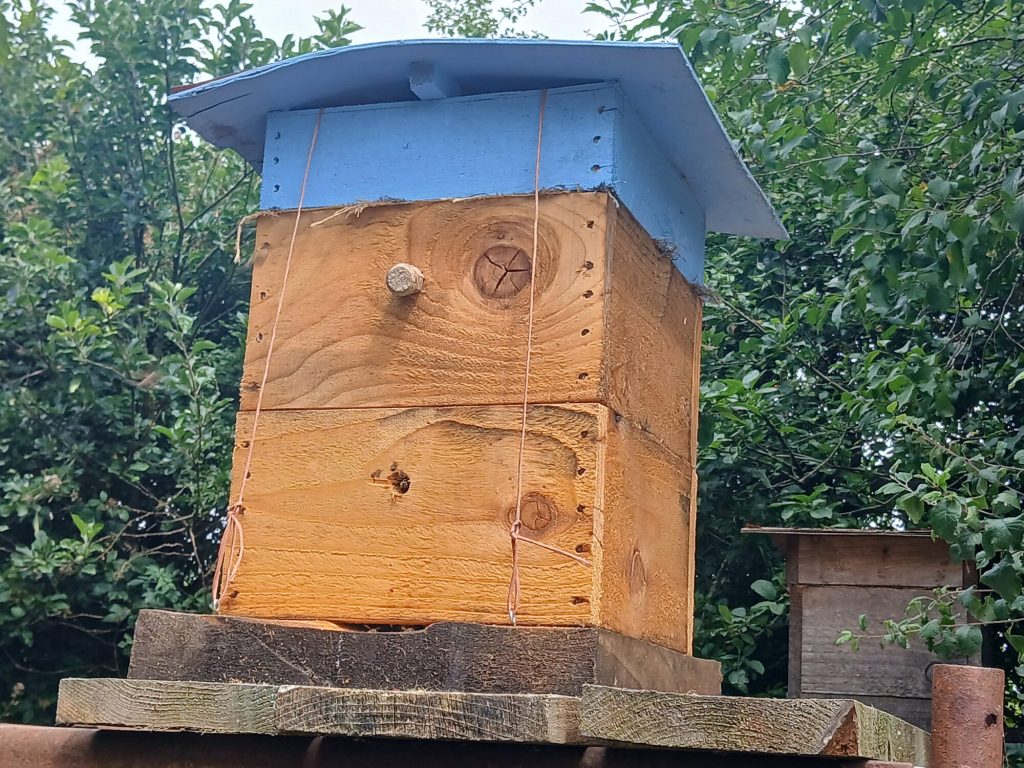
Spring (March to May). Spring starts with the first steady pollen, often willow and gorse in March. On a mild day, check that the entrance is clear and the quilt is dry, then heft the hive. March and early April are the real danger months, when a growing colony can run out of stores.
If a hive is light, feed it. Put fondant, or a feeder of syrup once it’s warmer, in an empty box placed above the top box, under the quilt. This is the one time an empty box goes above the bees, and it comes off again once they’ve finished the feed.
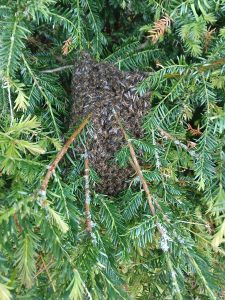
Nadir the first empty box when the lowest box is about three-quarters full and the frosts are easing, usually in April or early May (see Chapter 8). Watch for swarming from mid-April in a warm year.
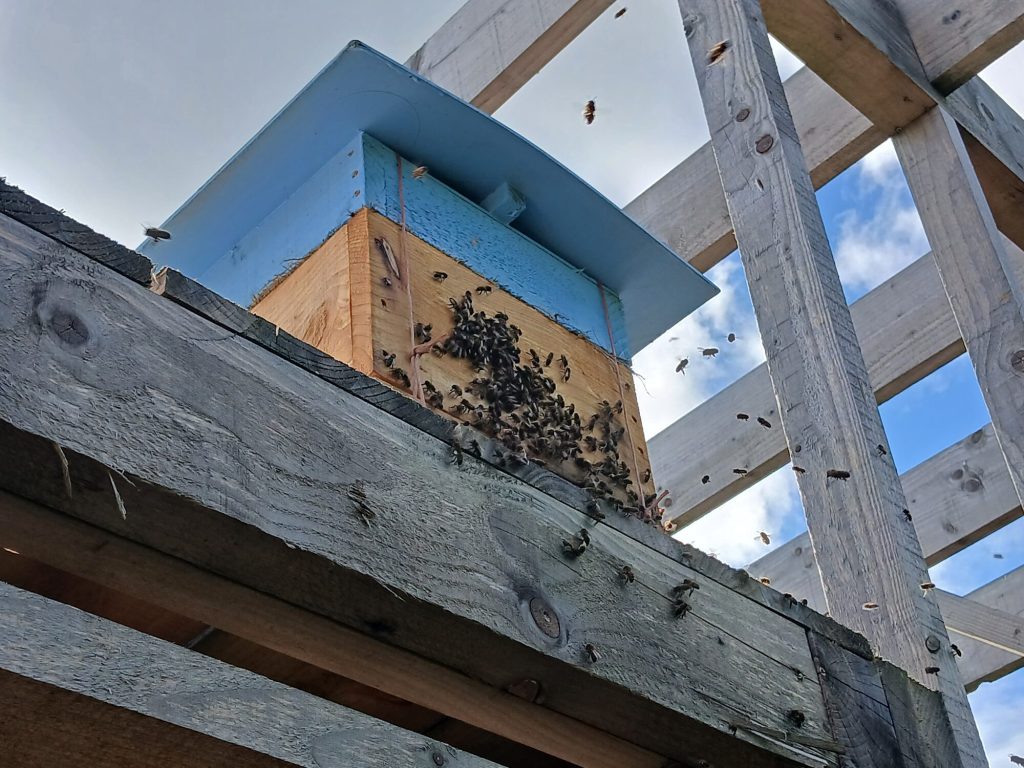
Summer (June to August). Summer means nadiring and watching. When clover, bramble, lime and willowherb are flowering, you’ll see white new wax on the comb edges and heavy bees landing at the entrance. Add boxes underneath before the colony runs out of space.
The “June gap”, a week or two of rain or few flowers in early summer, is the main danger. It can stop comb building and starve a big colony, so heft the hives. Don’t take early honey the bees may still need.
On the bogs, the ling heather flowers from mid-August.
Autumn (September to November). After the main flow:
- Take off any genuinely surplus capped boxes by early September.
- Reduce the entrance and fit the mouse guard.
- Check you’ve left at least the winter stores in Chapter 9 (15 kg or more).
- Combine any weak colony with a strong one using a sheet of newspaper between the boxes, but only if both are healthy.
- If you must feed, use 2:1 syrup (2 kg of sugar to 1 litre of water) and finish by the end of September, so the bees can store and cap it. Fondant is safer later in the year.
Ivy flowers from September into November, and on a good day the hives roar with it. Strap the hives down before the autumn storms. October is also when Asian hornets are most active (see Chapter 11).
Winter (December to February). Winter management is mostly leaving the bees alone.
- Quilt: it must stay dry. If you find it sodden when you check on a mild day, replace the filling with dry shavings.
- Entrance: clear away snow or dead bees.
- Roof: check it after storms.
- Feeding: don’t feed syrup in cold weather. Use fondant only, and only if the hive is very light.
A colony with enough stores and a dry nest will fly on any day above roughly 8–10 °C. It starts rearing brood again as the days lengthen.
The Warré’s small cavity and its quilt are a real advantage in a damp Irish winter, because they stop condensation dripping onto the cluster.